

Moringa: The Miracle Tree for Health – Benefits, Uses & Precautions
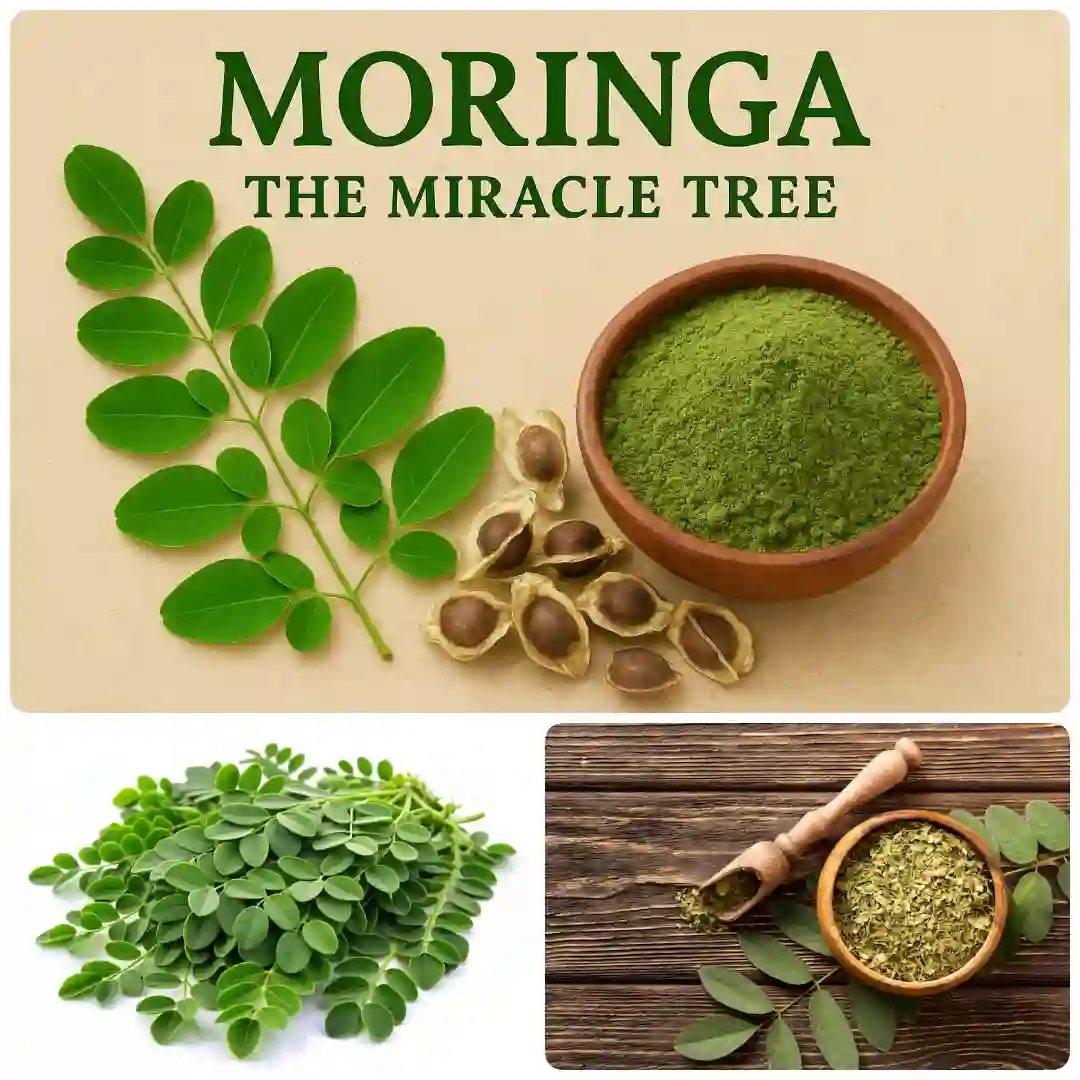
Botanical Name: Moringa oleifera
Introduction
Moringa, popularly known as the “Drumstick Tree” or “Miracle Tree,” is one of the most nutrient-dense plants on Earth. It has been used for centuries in Ayurveda for its wide range of medicinal properties. Almost every part of the plant—leaves, pods, seeds, and roots—is packed with vitamins, minerals, antioxidants, and essential amino acids. Ayurveda describes Moringa as tridosha hara, meaning it helps balance Vata, Pitta, and Kapha when used correctly.
Key Properties of Moringa (According to Ayurveda)
- Rasa (Taste): Katu (pungent), Tikta (bitter)
- Guna (Qualities): Laghu (light), Ruksha (dry)
- Veerya (Potency): Ushna (hot)
- Vipaka (Post-digestive effect): Katu (pungent)
- Dosha Effect: Balances Kapha and Vata, may increase Pitta in excessive amount
- Ayurvedic Actions:
- Deepana (enhances digestive fire)
- Ruchya (improves taste)
- Shothahara (reduces inflammation)
- Rasayana (rejuvenating)
- Krimighna (anti-parasitic)
- Balya (strengthening)
Different Names in Other Languages & Regions
- Hindi: Sahjan / Munaga
- Sanskrit: Shigru
- Tamil: Murungai
- Telugu: Munakkada
- Malayalam: Muringa
- Kannada: Nugge
- Bengali: Sajna
- Gujarati: Saragvo
- English: Drumstick Tree / Horseradish Tree
- Urdu: Sohanjna
Health Benefits of Moringa
Here are the top benefits of Moringa:
- Rich in Nutrients
Moringa leaves contain high amounts of vitamins A, C & E, calcium, potassium, and plant protein. - Boosts Immunity
Antioxidants help strengthen the immune system and protect from infections. - Controls Blood Sugar Levels
Moringa may help regulate glucose levels naturally. - Supports Digestive Health
Helps reduce bloating, improve gut health, and ease constipation. - Anti-inflammatory Properties
Reduces joint pain, swelling, and inflammation. - Enhances Skin & Hair Health
Its nutrients support collagen production and promote hair growth. - Helps in Weight Management
Improves metabolism and aids fat burning. - Good for Heart Health
Helps lower cholesterol and maintain healthy blood pressure. - Improves Lactation
Traditionally used to increase breast milk production in new mothers. - Detoxifying Agent
Helps cleanse the liver and remove toxins from the body.
How to Use Moringa as per Ayurveda
1. Moringa Leaves
- Consume fresh leaves cooked as a vegetable.
- Add dried leaf powder to smoothies, soups, or warm water.
2. Moringa Powder
- Take 1 teaspoon (3–5 g) in warm water in the morning on an empty stomach.
- Mix with honey for boosting immunity.
3. Moringa Pods (Drumsticks)
- Use in curries, dals, or soups for nutritional benefits.
4. Moringa Tea
- Boil 1 tsp moringa leaf powder in water for 5 minutes.
- Strain and drink warm.
5. Moringa Seed Oil
- Apply externally for glowing skin and better hair health.
Precautions
- Avoid excessive consumption as it may increase Pitta (heat).
- Pregnant women should consult a doctor before use.
- May interact with diabetes or hypertension medications.
- Do not exceed 5–10 grams of powder per day.
- Some people may experience loose motions initially.
Frequently Asked Questions (FAQs) for Moringa
1. What is Moringa good for?
Moringa is good for immunity, digestion, energy, and inflammation.
2. Can I take Moringa every day?
Yes, in moderate amounts (3–5g per day) it is safe for most adults.
3. Does Moringa help with weight loss?
Yes, it boosts metabolism and improves digestion, supporting weight reduction.
4. Can diabetic patients use Moringa?
Yes, but consult a doctor because it may reduce blood sugar levels.
5. Are Moringa leaves good for hair?
Yes, they nourish the scalp, strengthen roots, and reduce hair fall.
6. Is Moringa safe for kids?
Small quantities in cooked form are safe, but avoid giving powder supplements to small children without medical advice.
7. Can Moringa be used during breastfeeding?
Traditionally used to increase milk production, but consult a doctor before use.
Click here for Ayurvedica Plants and herbs

Post Comment